Sean Connery's Complicated Return to James Bond in 'Never Say Never Again'
Sean Connery's return as James Bond in 'Never Say Never Again' in 1983 marked a significant moment in the franchise's history. Despite being hailed as the best Bond by many, this film is considered unofficial due to legal disputes over its production. The film's unique status and Connery's age during filming add layers to its legacy, illustrating the complexities of the Bond canon and its impact on the franchise's future.
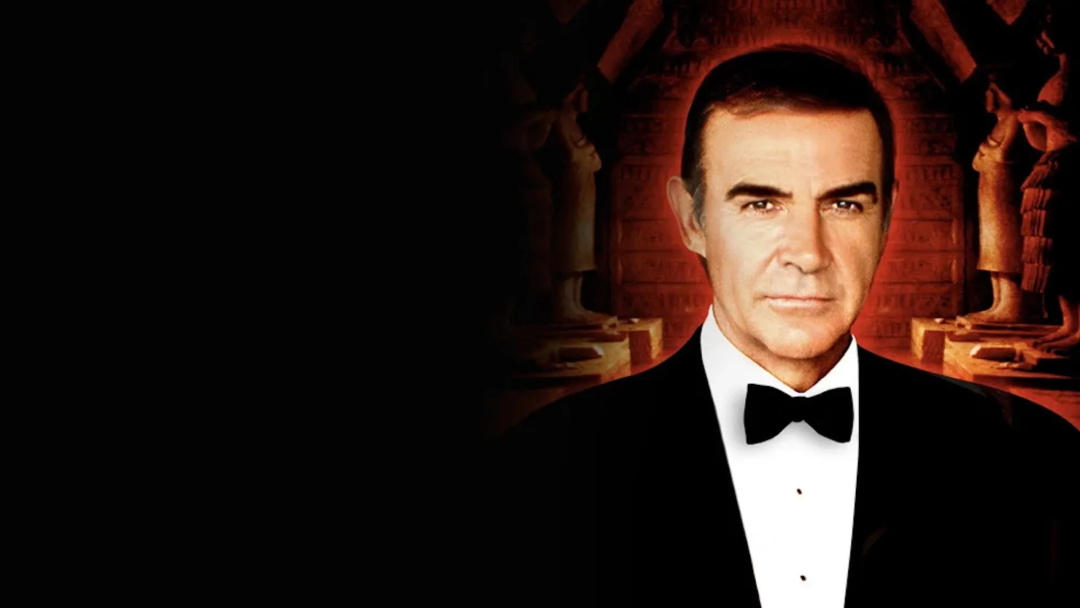
Every few years, the debate resurfaces over who played James Bond best, with Sean Connery frequently emerging as the winner or tying for first place. While Daniel Craig has garnered significant acclaim, many still associate the iconic character with Connery, whose portrayal remains a benchmark in the franchise's history. However, Connery's return to the role in 1983 with 'Never Say Never Again' is shrouded in controversy and legal complexities that set it apart from the official Bond canon.
Connery famously stepped away from the role after 'Diamonds Are Forever' in 1971, stating he would not return. Yet, twelve years later, at the age of 53, he reprised the character in a film that was not produced by the official Bond franchise. 'Never Say Never Again' was released on October 7, 1983, but it was produced by a rival studio, Warner Bros., and thus does not count within the official Bond series. This unique circumstance has led to its classification as an unofficial entry, alongside the 1967 spoof 'Casino Royale.'
The Dead Drop Gift Shop
Sponsorship mission accomplished.
The origins of this legal dispute date back to the late 1950s when producer Kevin McClory collaborated with Ian Fleming and screenwriter Jack Whittingham on a Bond screenplay that ultimately was never filmed. Fleming later adapted this material into his novel 'Thunderball' without crediting McClory or Whittingham, leading to a lawsuit that concluded with McClory retaining rights to the story but not the character of James Bond himself. This legal ambiguity continued to haunt the franchise, with a U.S. appeals court in 2001 acknowledging that the extent of Fleming's assignment to McClory remained unresolved.
In 1965, McClory produced the official 'Thunderball,' but after years of stalled projects, he finally managed to create 'Never Say Never Again' by revisiting the Thunderball plot. The film's production faced numerous challenges, including a budget of $36 million, which surpassed that of the official Bond film released the same year. Directed by Irvin Kershner, known for 'The Empire Strikes Back,' the film featured a recast of supporting roles, with Max von Sydow as Blofeld and Edward Fox as a younger version of M. Notably, the film lacked the iconic gun barrel opening and the Monty Norman theme, as those elements were owned by Eon Productions.
Connery's Strategic Return to Bond
Connery's return was marked by a mix of nostalgia and practical considerations. He approached the project with significant leverage, securing a multimillion-dollar fee and creative control over the script and casting. The title 'Never Say Never Again' itself was inspired by a remark from Connery's wife, Micheline, who humorously noted his previous claims of never returning to the role. This charming detail adds a personal touch to a film that exists in a complicated legal and cultural landscape.
Despite its unofficial status, 'Never Say Never Again' performed well at the box office, opening with approximately $11 million compared to Roger Moore's 'Octopussy,' which earned about $8.9 million in its opening weekend. However, over time, 'Octopussy' outperformed Connery's film, grossing around $187.5 million worldwide compared to 'Never Say Never Again's' $160 million. The simultaneous release of two Bond films in the same year created a unique situation, splitting the audience and impacting the franchise's perception.
The Debrief
Looking back, 'Never Say Never Again' is worth revisiting, especially for its cast, which includes notable performances from Klaus Maria Brandauer, Barbara Carrera, and a young Kim Basinger. Critics at the time were generally favorable, and retrospective reviews have shown that it holds a respectable score on platforms like Rotten Tomatoes. The film's legacy is further complicated by the fact that in 1997, MGM acquired the rights to 'Never Say Never Again,' and in 2013, all remaining rights were secured, effectively closing a chapter on the long-standing legal disputes surrounding the film.
In a 2021 survey, a significant majority of Bond fans expressed that they consider 'Never Say Never Again' a legitimate Bond film, reflecting the film's enduring appeal despite its complicated history. As we approach the film's 43rd anniversary, it remains a fascinating case study in the world of espionage cinema, showcasing how legal battles and personal decisions can shape the legacy of one of the most iconic characters in film history.