From Chess to Codebreaking: England's 1939 Olympiad Team at Bletchley Park
As World War II began, three members of England's 1939 Chess Olympiad team—Hugh Alexander, Stuart Milner-Barry, and Harry Golombek—returned home to join the codebreaking efforts at Bletchley Park. Their skills honed on the chessboard proved invaluable in decrypting the Enigma code, contributing significantly to the Allied war effort.
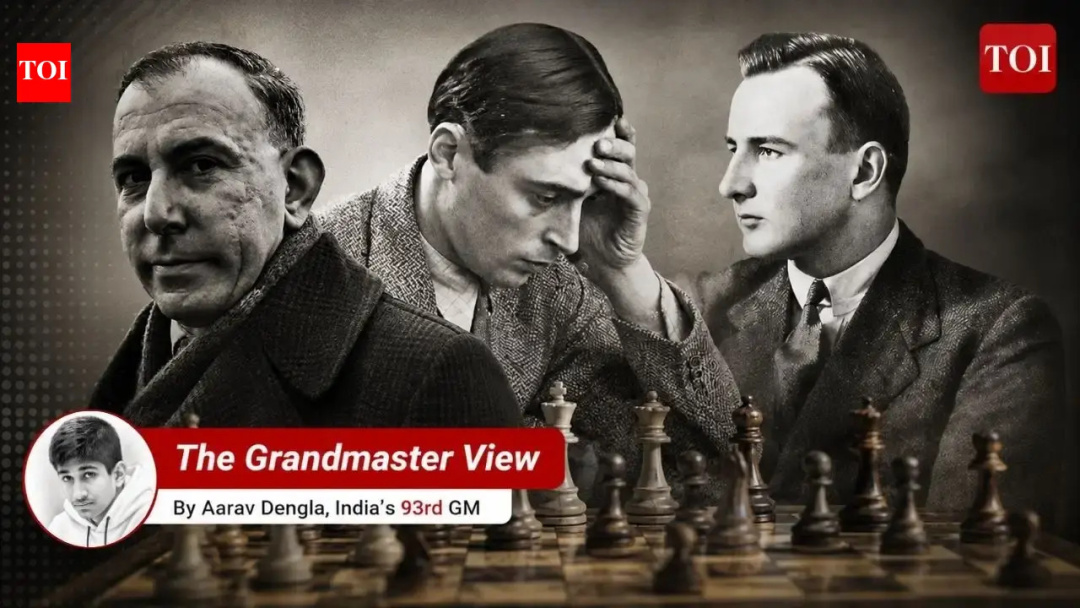
On September 1, 1939, Germany's invasion of Poland marked the beginning of World War II, while in Buenos Aires, the final stage of the 1939 Chess Olympiad was underway. This event, the first Olympiad held outside Europe, featured twenty-seven national teams, including England's five-player squad: Hugh Alexander, Sir George Thomas, Stuart Milner-Barry, Harry Golombek, and Baruch Wood. As Britain declared war on Germany on September 3, England withdrew from the competition, returning home while other teams continued. Germany ultimately won the Olympiad, finishing just ahead of Poland.
For three members of the English team, the journey home led to a pivotal role in the war effort that would remain classified for decades. Alexander, Milner-Barry, and Golombek joined the Government Code and Cypher School at Bletchley Park, where Britain had assembled a team of elite chess players, mathematicians, linguists, engineers, and intelligence analysts to break the Enigma code used by the German armed forces for encrypted communications.
The Dead Drop Gift Shop
Sponsorship mission accomplished.
The presence of these chess players in a top-secret codebreaking organization did not imply that chess skills directly translated to cryptanalysis. Codebreaking was a collaborative effort, requiring diverse talents from various fields. Nevertheless, the skills they developed through chess—such as concentration, pattern recognition, and patience—were crucial in their roles at Bletchley.
Alexander arrived at Bletchley Park in February 1940, initially working in Hut 6, which focused on codes used by the German Army and Luftwaffe. By March 1941, he transitioned to Hut 8, which dealt with the German Navy's codes, eventually becoming Alan Turing's deputy and later acting head. During his tenure, Alexander's work was vital during the Battle of the Atlantic, where decrypting German naval signals helped locate U-boats and protect Allied supply convoys.
Milner-Barry led a group in Hut 6 that searched for "cribs"—pieces of plaintext that might appear in encrypted messages. These cribs were hypotheses that could be tested with specialized codebreaking machines. By March 1943, Milner-Barry was appointed head of Hut 6. Golombek also contributed to Hut 8's naval Enigma efforts before moving to another section in late 1942.
The Challenges of Codebreaking Complexity
The Enigma machine's complexity made codebreaking a formidable challenge, as its configurations changed frequently. Success on one day could be rendered obsolete by the next setting change. Human judgment was essential to narrow down possibilities using evidence from captured materials, knowledge of German procedures, and operator mistakes, which were then tested using machines. The parallels between chess and codebreaking are striking; just as chess players focus on a limited number of plausible moves, codebreakers had to concentrate their efforts on the most promising leads.
The trio did not single-handedly break the Enigma code. Prior to the war, Polish cryptanalysts had already made significant progress, and the British efforts built on those earlier discoveries. At Bletchley Park, thousands contributed to the interception, analysis, and distribution of intelligence.
The Final Read
After the war, Alexander, Milner-Barry, and Golombek returned to civilian life. Golombek resumed his chess career as a writer and arbiter, Milner-Barry joined the Treasury, and Alexander continued in the intelligence community, eventually leading codebreaking efforts at GCHQ. For many years, their contributions at Bletchley remained classified, and the men who played such critical roles went unrecognized.
In September 1939, five Englishmen left a tournament in Buenos Aires, sailing home and leaving the trophy to Germany. Over the following six years, these men engaged in a far more consequential arena, one that would determine the fate of nations. Though they did not win the tournament, their efforts were instrumental in the Allied victory in World War II.