Inside the Lagercrantz Suitcase Radio: A Portable Spy Device from WWII
The Lagercrantz suitcase radio, a Swedish spy device from World War II, exemplifies the ingenuity of portable espionage technology. This article explores its design, functionality, and the historical context that made it a valuable tool for intelligence operatives during the war.
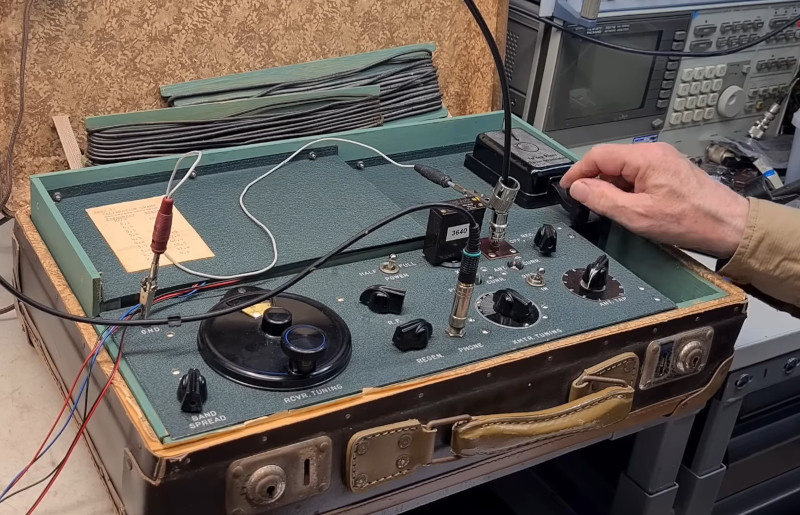
The Lagercrantz suitcase radio, a remarkable piece of espionage technology from World War II, showcases the innovative spirit of its time. Originally designed for portability, this Swedish radio was compact enough to fit into a suitcase, making it an ideal tool for covert operations. Helge Fykse, the current owner, provides a fascinating glimpse into this vintage spy gear, which was once considered cutting-edge for its era.
At the heart of the Lagercrantz radio lies a large crystal oscillator responsible for setting the transmit frequency, paired with a key for sending Morse code messages. The receiver features a Variable Frequency Oscillator (VFO), enhancing its agility and responsiveness. Its regenerative design, indicated by the regenerative knob, allowed for improved signal reception. The suitcase itself housed a dedicated battery, enabling the radio to transmit signals when connected to any metal object, such as bedsprings or clotheslines, which could serve as an antenna. A built-in lightbulb indicated when the device was transmitting at maximum power, ensuring operatives could manage their communications effectively.
The Dead Drop Gift Shop
Sponsorship mission accomplished.
Inside the suitcase, five vacuum tubes powered the radio—two for the transmitter and three for the receiver. The design included storage for spare tubes, allowing agents to maintain functionality even in the field. This attention to detail highlights the practical considerations that went into crafting such a device, ensuring it could withstand the rigors of espionage work.
Fykse not only showcases the radio's interior but also presents its schematic, which, while simple, underscores its effectiveness as a communication tool. The radio's design reflects a blend of functionality and simplicity, proving its worth in the hands of intelligence operatives.
Despite being locked away in a suitcase for over 80 years, the Lagercrantz radio appears surprisingly clean and well-preserved. Questions arise about its condition—was it maintained in a cold storage environment, or did it simply receive a thorough cleaning before being featured in a recent video? The radio's authenticity is supported by its English labels, which suggest it may have been produced in the UK, although its exact origins remain a topic of discussion among enthusiasts.
As discussions about the radio continue, enthusiasts speculate on its operational capabilities and the experiences of those who used it. The Lagercrantz suitcase radio stands as a testament to the resourcefulness of spies during World War II, embodying the spirit of innovation that characterized the era's espionage efforts. Its legacy continues to intrigue collectors and historians alike, reminding us of the intricate tools that shaped the world of intelligence.